
Book an appointment

Physiotherapy in Pantin

Pelvic floor, pregnancy, infants, scars.

I care for bodies in all their diversity, with one conviction: your body belongs to you, and you are the person best placed to speak about what it is going through.

I see you in one-to-one sessions, in a calm and confidential setting. We begin by taking time to talk, then move forward step by step, with clear explanations and always with your consent.

The practice entrance: a green wall with plants, waiting chairs and a glass door opening onto the courtyard

Your body, your choices

My approach is feminist because it starts from one principle: every person has the right to clear, complete information in line with current scientific knowledge, to free, informed and revocable consent, and to care that respects their privacy, their history and their identity.

I remain attentive to medical, obstetric and gynaecological violence, and to personal histories marked by sexual violence. I adapt my care to what you are ready to experience.

I also support trans and non-binary people through their gender affirmation journey, with or without surgery: pre-operative preparation and post-operative recovery, pelvic floor rehabilitation, pain and comfort. You are welcomed with your name and your pronouns, with no intrusive curiosity and nothing to justify.

Areas of care

Four areas, one way of working: listening, explaining, then suggesting exercises suited to your daily life.

Female and male pelvic floor

Urinary leakage, pelvic pain or pain during sex, pelvic organ prolapse, recovery after childbirth, prostate surgery or medical treatment: the pelvic floor concerns every body, at every age. I also provide anorectal rehabilitation (anal incontinence, constipation) and pessary fitting. You are equally welcome to come simply to better understand this part of the body, which is still talked about far too little.

Urinary leakage · Pelvic pain · Prolapse · Postpartum · Prostatectomy · Surgery
Pregnancy and postpartum

During pregnancy, physiotherapy relieves back, pelvic and pubic pain and prepares the body for birth. Staying active is also part of care: I help you continue or adapt your physical activity, safely, in every trimester. After the birth, we rebuild step by step: pelvic floor, deep abdominal muscles, then a gradual return to activity.

Low back and pelvic pain · Adapted physical activity · Pelvic floor preparation · Abdominal rehabilitation

Infants

Torticollis, a flattening head, a marked preference for one side, foot malposition, delayed motor milestones: I work with little ones gently, through play and movement. Parents are always involved: your observations and your intuition are invaluable, and I show you the movements to repeat at home.

Torticollis · Plagiocephaly · Foot malpositions · Motor development

Scars

Caesarean section, episiotomy, perineal tear, abdominal or pelvic surgery, top surgery: a scar can remain sensitive, pull or restrict movement, sometimes long afterwards. Manual therapy, cupping and TECAR therapy soften the scar and soothe the area, and I show you self-massage techniques to continue at home.

Caesarean section · Episiotomy and tears · Gender-affirming surgery

Your first session

One hour to get to know each other, understand your situation and plan the next steps together.

  1. We talk

    You tell me what brings you here, your history, your habits and what you expect from the sessions.

  2. I carry out an assessment

    Posture, breathing, mobility. A pelvic floor examination is never compulsory: it is only carried out with your consent.

  3. We set a direction

    I explain what I have observed, and together we choose realistic goals and a frequency of sessions.

  4. You leave with tools

    Simple exercises to repeat at home, so that progress continues between sessions.

Practical information

The essentials to know before you come. For any other question, an email is all it takes.

Prescription
A prescription from your doctor is required for the sessions to be reimbursed. Remember to bring it to your first appointment.
Duration
1 hour for the first assessment session, 30 min for the following ones. All sessions are one-to-one.
Fees
€70 for the assessment, €35 for a follow-up session. Physiotherapist under agreement with French national health insurance (conventionnée). Expect a fee above the reimbursed rate (dépassement d'honoraires).
What to bring
Prescription, carte Vitale (French health insurance card), any test results relevant to the reason for your visit and, for an infant, their health record (carnet de santé).
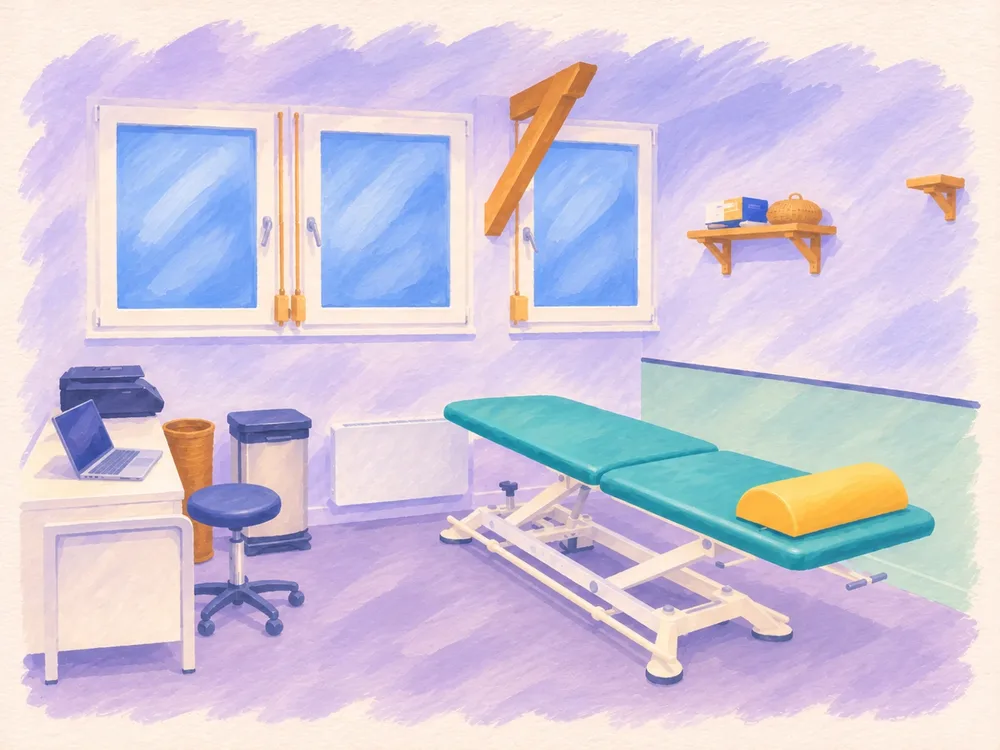
The treatment room at the practice: physiotherapy table, desk and windows

The practice

Address

44 avenue Jean Lolive
93500 Pantin

Getting here

  • Metro — line 5, Hoche station (2 min walk)
  • RER — line E, Pantin station (12 min walk)
  • Bus — routes 170 and 249, Hoche stop
  • Bike — Vélib' station and bike racks outside the practice

Opening hours

  • Monday — 9 am to 6 pm
  • Tuesday — 9 am to 12 pm
  • Friday — 9 am to 5 pm
Book an appointment

Accessible to pushchairs and people with reduced mobility

Frequently asked questions

There are no embarrassing questions. If yours is not here, write to me.

When should pelvic floor rehabilitation start after a birth?

Generally six to eight weeks after delivery, once the postnatal check-up has taken place. If you are in pain or your situation requires it, I can see you earlier, with your doctor's agreement. It is never too late: rehabilitation remains useful months, even years, later.

Is pelvic floor rehabilitation painful?

No. The techniques are gentle and gradual, and nothing is done without your consent. If something is uncomfortable, we adapt it or do it differently.

Which pelvic floor rehabilitation techniques do you use?

Biofeedback with a probe, electrical stimulation, ultrasound biofeedback or manual rehabilitation: the choice depends on the assessment, your symptoms and what you prefer.

Can I come with my baby?

Yes, of course. The practice is accessible with a pushchair, and you can feed or change your child during the session if needed.

How many sessions should I expect?

It depends on your situation. Pelvic floor rehabilitation often takes around ten sessions; for an infant, a few sessions are sometimes enough. We review progress regularly.

What if the fee above the reimbursed rate is an obstacle for me?

If you are in financial difficulty, write to me before booking an appointment. Cost should not make you give up on care.

Let's take the time for a first appointment.

Appointments are booked online, on Doctolib. If you are unsure which type of session to choose, write me a few lines: I will guide you.

Yoga

Yoga that is attentive, inclusive and free of performance, in group or private classes.

Find out more